
 Emissions calculator


Every sheep and beef farm is different. Improving efficiency across the whole farm system can benefit productivity and profitability and help to reduce on-farm emissions. Many farmers are making practical lower-risk changes that deliver early wins and build confidence, then making bigger changes over time.
What's working on sheep and beef farms
-
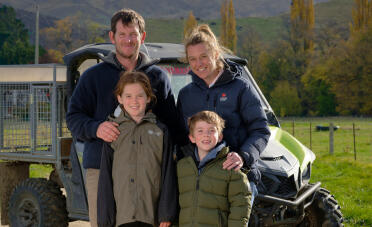
Building resilience in a changing environment
Emma Crutchley's family have been farming on Puketoi Station in the Māniatoto since 1939. They've had to adapt to many issues outside of their control over this time. Keeping a positive mindset is helping them get their heads around the latest challenge - greenhouse gas emissions and climate change.
-
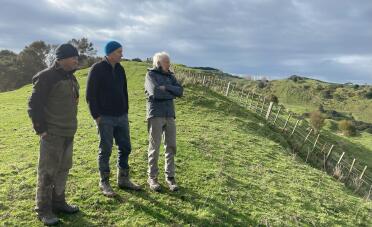
Diversifying for Better Performance and Fewer Emissions
Over 60 years of farming, Nick Tripe has established a 1,325 hectare (936ha effective pasture and 245ha productive mānuka) hill country property located between Whanganui and Hunterville. The property is rich in history, with the family farming the original block in 1928, and has grown over time to the enterprise it is today.
-
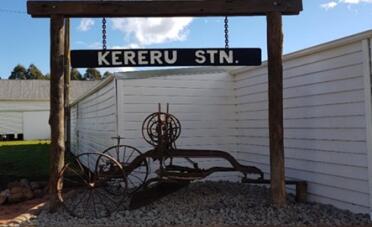
A flexible farm is a more resilient farm
Kereru Station is a sheep and beef property located in the Kereru district, west of Hastings in the Hawke’s Bay. It has a total of 2,848 hectares of flat to medium hill country, with 730 hectares made up of gorges and plantation forestry.
-
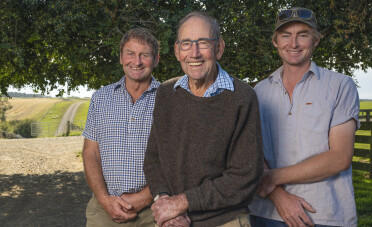
Soil health and innovation focus help reduce emissions
A passion for innovation has been a common thread through four generations of farmers on the Abbiss' property near Halcombe. Now they're turning their attention to how they might reduce their impact on the climate.
-

People, planet and profit
George and Sharon Moss have been dairy farming in Tokoroa for nearly 40 years. Their impact on the climate wasn't a consideration back then, but it's at the forefront of how they farm now.
-
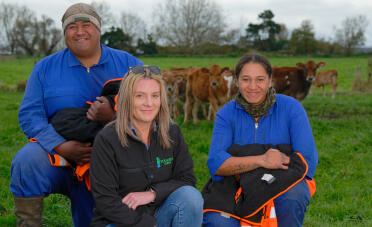
The long game: Farming for future generations
Pouarua Farms takes a long-term outlook when it comes to managing the land. For the five iwi who own the Hauraki Plains’ largest dairy platform, that means making decisions that will sustain the land and create an intergenerational asset.
Actions for sheep and beef farmers
-
Stocking rate and performance
Small changes to stocking rates, feed use and animal performance can improve efficiency while maintaining productivity. On some farms, fine-tuning the farm system can reduce greenhouse gas emissions by up to 10%.
-
Low-emission feeds
Research is showing that feed choices may help reduce emissions while still supporting good production and animal performance. What works will depend on your farm system, feed availability and economics.
-
Nitrogen fertiliser
For some farms, reducing nitrogen use or applying it more strategically can lower nitrous oxide emissions and reduce costs without significantly affecting production. The right approach will depend on your soils, climate and farm system.
-
Trees and vegetation
There are many benefits from planting trees or restoring woody vegetation on a farm, including to help combat climate change by removing carbon dioxide. However, it's a complex topic.
-
Potential actions
Explore emerging options and future technologies currently being researched. These approaches are showing promise, but more evidence is needed before they are recognised in New Zealand's national greenhouse gas inventory.
Next steps: What actions could work on your sheep and beef farm?
There’s no one-size-fits-all approach when it comes to improving farm performance and reducing on-farm emissions.
Next steps:
- Improve efficiency and make better use of inputs.
- Calculate your farm’s greenhouse gas emissions.
- Set practical goals that work for your farm.
Not sure where to start?
- Understand the basics of agricultural emissions.
- Understand where emissions come from on your farm.
- Or jump straight into the emissions calculator.