
 Emissions calculator


Modelling suggests that farmers might be able to reduce emissions by 2-10% but different things will work on different farms.
Actions for dairy farmers
-
Stock rate and performance
Modelling shows it might be possible to reduce total greenhouse gas emissions by up to 10% on some farms, by fine-tuning production systems so the same output is obtained from fewer animals.
-
Efficiency improvements
Increasing outputs relative to inputs won't necessarily reduce absolute emissions, but it will improve emissions per unit of product. It's been of great benefit to New Zealand already - and that's likely to continue.
-
Low-emission feeds
Research is showing that feed choices may help reduce emissions while still supporting good production and animal performance. What works will depend on your farm system, feed availability and economics.
-
Once-a-day milking
For some farms, once-a-day milking can help lower operating costs while reducing emissions. Results will depend on factors such as production levels, labour savings and how it fits within the wider farm system.
-
Nitrogen fertiliser
For some farms, reducing nitrogen use or applying it more strategically can lower nitrous oxide emissions and reduce costs without significantly affecting production. The right approach will depend on your soils, climate and farm system.
-
Trees and vegetation
There are many benefits from planting trees or restoring woody vegetation on a farm, including to help combat climate change by removing carbon dioxide. However, it's a complex topic.
-
Potential actions
Explore emerging options and future technologies currently being researched. These approaches are showing promise, but more evidence is needed before they are recognised in New Zealand's national greenhouse gas inventory.
Case studies
-
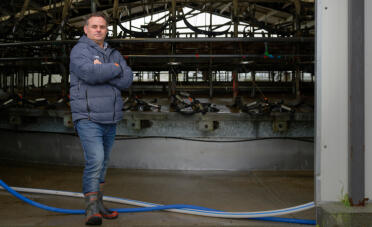
Small efficiency gains that added up to big changes
In 2019, Canterbury dairy farmer Dion Gordon experienced something of a nightmare. The Rangitata River burst its banks, flowed onto his farm and took a huge swathe of topsoil out to sea. Dion had no choice but to drop stock numbers - but what happened next was a surprise.
-

Farming with whakapapa and the future in mind
Farming has long been a way of life for Orete – a Māori Incorporation with 1,500 owners on the tip of the remote East Cape. Te Taiao is at the heart of all they do, including finding ways to keep their agricultural greenhouse gas emissions down.
-
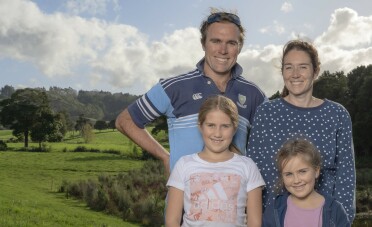
Andrew and Vicky Booth, Northland
Taking care of the environment is a priority on Andrew Booth's dairy farm, an approach that is leading to better production outcomes as well as wins for freshwater, biodiversity and the climate.
-

People, planet and profit
George and Sharon Moss have been dairy farming in Tokoroa for nearly 40 years. Their impact on the climate wasn't a consideration back then, but it's at the forefront of how they farm now.
-
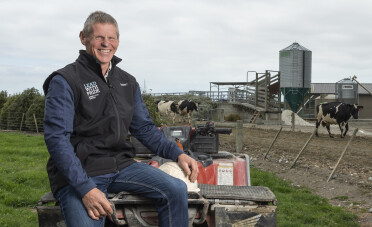
Phill and Jos Everest, Canterbury
A balanced approach to dairy farming on the heavy soils of coastal mid-Canterbury is essential in Phill and Jos Everest's efforts to reduce Flemington Farm's agricultural greenhouse gas emissions.
More information
-
Understanding your farm's emissions
Build a clearer picture of the greenhouse gas emissions linked to your farm system, including stock, feed and fertiliser inputs.
-
Reduce methane emissions
Methane is a natural by-product of livestock farming and makes up a significant share of New Zealand's agricultural emissions. Many of the actions that support productive, efficient farm systems can also help reduce methane emissions intensity.
-
Reducing nitrous oxide emissions
Practical ways to improve nitrogen management on farm.
-
Soil health and carbon
Healthy soils support pasture resilience, productivity and long-term farm performance. Research is helping build understanding of what works under NZ conditions.
-
Trees and vegetation
There are many benefits from planting trees or restoring woody vegetation on a farm, including to help combat climate change by removing carbon dioxide. However, it's a complex topic.